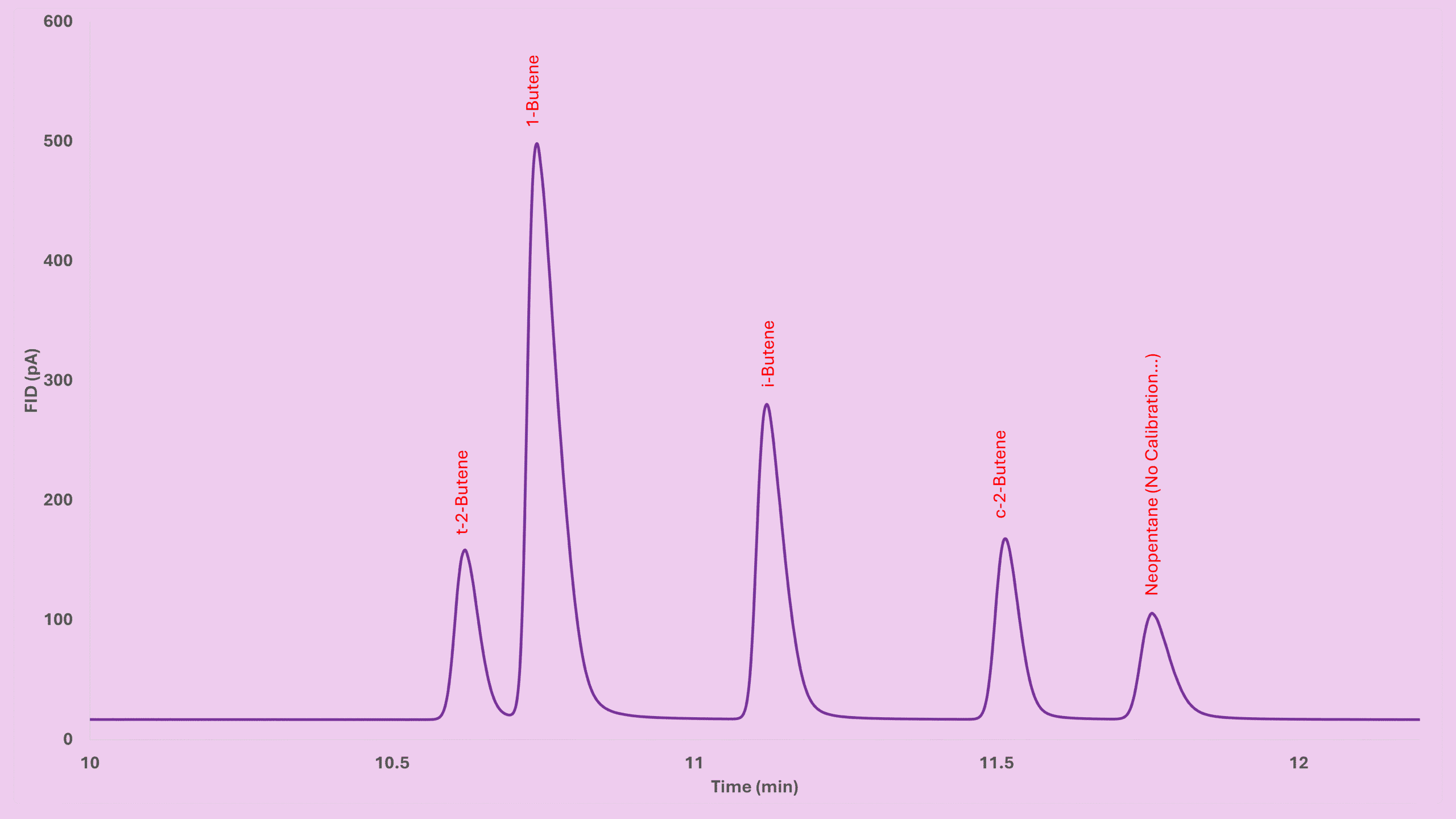

Keeping your GC running smoothly becomes much easier when you understand the basics of Agilent FID maintenance. If you use an Agilent Flame Ionization Detector daily—especially for hydrocarbon samples—consistent care helps you avoid noisy baselines, ignition failures, and sudden downtime. This guide walks you through the essential parts to check, why they matter, and how to keep your FID performing at its best.
Why Agilent FID Maintenance Matters
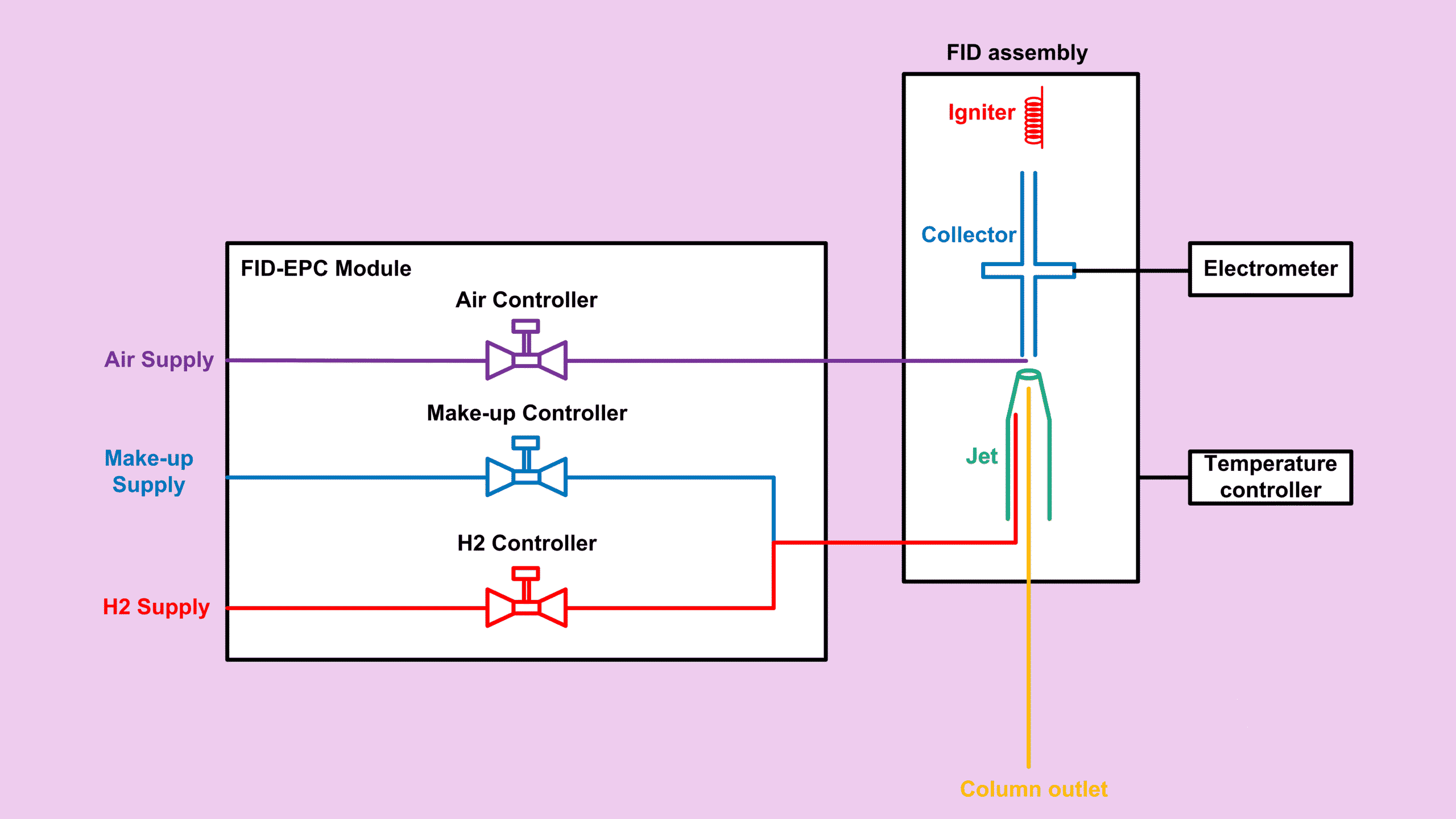
A well-maintained FID gives you stable signals, predictable sensitivity, and clean baselines. More importantly, it saves you troubleshooting time. Although the FID has simple chemistry behind it—carbon-based compounds forming ions in a flame—its performance depends heavily on clean gas lines, proper flows, and a contamination-free detector body.
If you need a refresher on how an FID works, check out my earlier post here on this site.
Maintaining the FID-EPC Module (Hydrogen, Air & Makeup Gas)
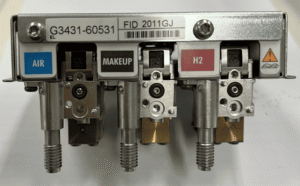
The Electronic Pneumatic Control (EPC) module manages all the gas flows feeding the detector. Because the EPC is the “lungs” of the FID, Agilent FID maintenance always starts here. Stable flows mean predictable response, and clean gas lines mean fewer mysterious spikes.
Replace Hydrocarbon & Moisture Filters
Hydrocarbon contamination reacts in the flame just like your analytes, which creates noisy baselines or random spikes. Moisture, on the other hand, destabilizes the flame and can clog internal restrictors.
A quick chemistry reminder for context:
Hydrocarbon + O₂ → CO₂ + H₂O + ions
(When hydrocarbons burn in the flame, they generate ions that become your GC signal.)
Fresh filters prevent false “signals” from the gases themselves. As a rule of thumb, replace them regularly, especially in humid environments.
Verify Each EPC Gas Flow
Checking flow accuracy is a simple but powerful diagnostic. Here’s the step-by-step:
- Turn off all FID-related flows; keep only the column flow.
- Attach a flowmeter at the detector outlet and record the baseline column flow.
- Turn on H₂ at 35 mL/min, measure, then subtract column flow.
- Turn on Air at 350 mL/min, measure again.
- Set Makeup gas at 15 mL/min and repeat.
If the measured values are within ±10%, your EPC is healthy.
Taking Care of the FID Assembly
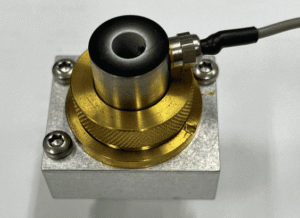
Beyond the EPC, several FID components need routine cleaning. These small parts accumulate residue over time, and ignoring them often results in baseline drift, ignition failure, or sensitivity loss.
Igniter: The Small Coil That Starts It All
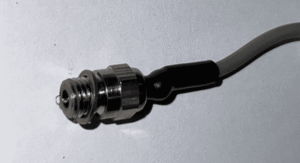
Heat, moisture, and air gradually corrode the igniter coil. A shiny coil means it’s good; a dark or brittle coil means replacement time. Because ignition problems are common, inspecting the igniter during Agilent FID maintenance can save you multiple failed starts.
Collector: Where Deposits Love to Hide
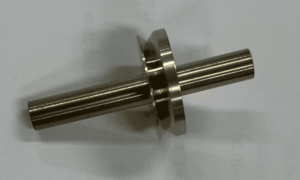
The collector often builds up carbon deposits from high-temperature methods or column bleed. Clean it using:
- A soft brush
- Ultrasonic bath with methanol or IPA for 10 minutes
This simple cleaning step noticeably reduces baseline drift.
Collector Insulator: The White Part That Turns Black
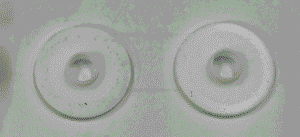
Burn marks or carbon dots reduce insulation. Wipe it gently and sonicate it together with the collector to restore the dielectric barrier.
Jet: The Most Common Source of FID Problems
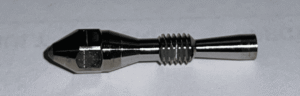
The jet orifice is tiny and clogs easily. Hold it toward the light—if you can’t see through, gently poke it with a fine metal wire, then sonicate it.
A clogged jet often explains drifting baselines or weak signals. Even if you install a new jet, checking the old one helps confirm system health.
Column Tip: Trim, Replace, Repeat
The column end inside the detector tends to burn or discolor. Trim 3–5 cm and use a new ferrule when reinstalling. This prevents leaks near the jet.
Column Adapter: The Hidden Source of Leaks
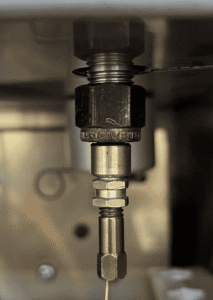
If the adapter rotates when you tighten the column nut, its ferrule is loose. Re-tighten it to avoid unstable baselines caused by leaks.
What To Do After Completing Agilent FID Maintenance
After cleaning and reassembly, keep these best practices in mind:
1. Keep the FID Inlet Closed
Always keep either a column or a plug connected. If H₂ backflows into the oven, it can create a serious hazard.
2. Expect Temporary Spikes
Residual solvents or moisture burn off as the flame stabilizes. It’s normal to see small spikes in the first few hours.
3. Bake the FID at 350 °C for Final Cleaning
If your column’s max temperature allows it, bake the FID at 350 °C. This high-temperature step removes deep-seated carbon residue.
You’ll typically observe this behavior:
- Baseline rises
- Slowly decreases
- Levels off (this indicates the bake is complete)
If your method already operates at high temperature, this step becomes optional.
Key Takeaways
- Agilent FID maintenance boosts detector sensitivity and extends lifespan.
- Clean the jet, collector, and insulator regularly for stable baselines.
- Verify EPC flows to ensure the detector receives accurate hydrogen, air, and makeup gas.
- Trim the column tip to remove burnt segments and avoid leaks.
- Perform a 350 °C bake after maintenance for best results.
Try This Next
If you found this guide useful, explore more GC insights in the GC Hardware section, or check out my other posts in Flame Ionization Detector (FID) series.