

If you’ve ever worked with gas chromatography, you know that the FID can sometimes behave like a mysterious black box. In this post, I’ll share some FID troubleshooting tips based on real-world issues I’ve faced with Agilent GC FIDs. These tips will help you quickly identify and fix problems without wasting hours guessing.
Before we dive in, just to let you know that this article is part of my Flame Ionization Detector (FID) series which you can find the summary for all other posts related to FID at FID Detector: Complete Guide to the Entire FID Series.
1. Non-reactive peaks are tailing
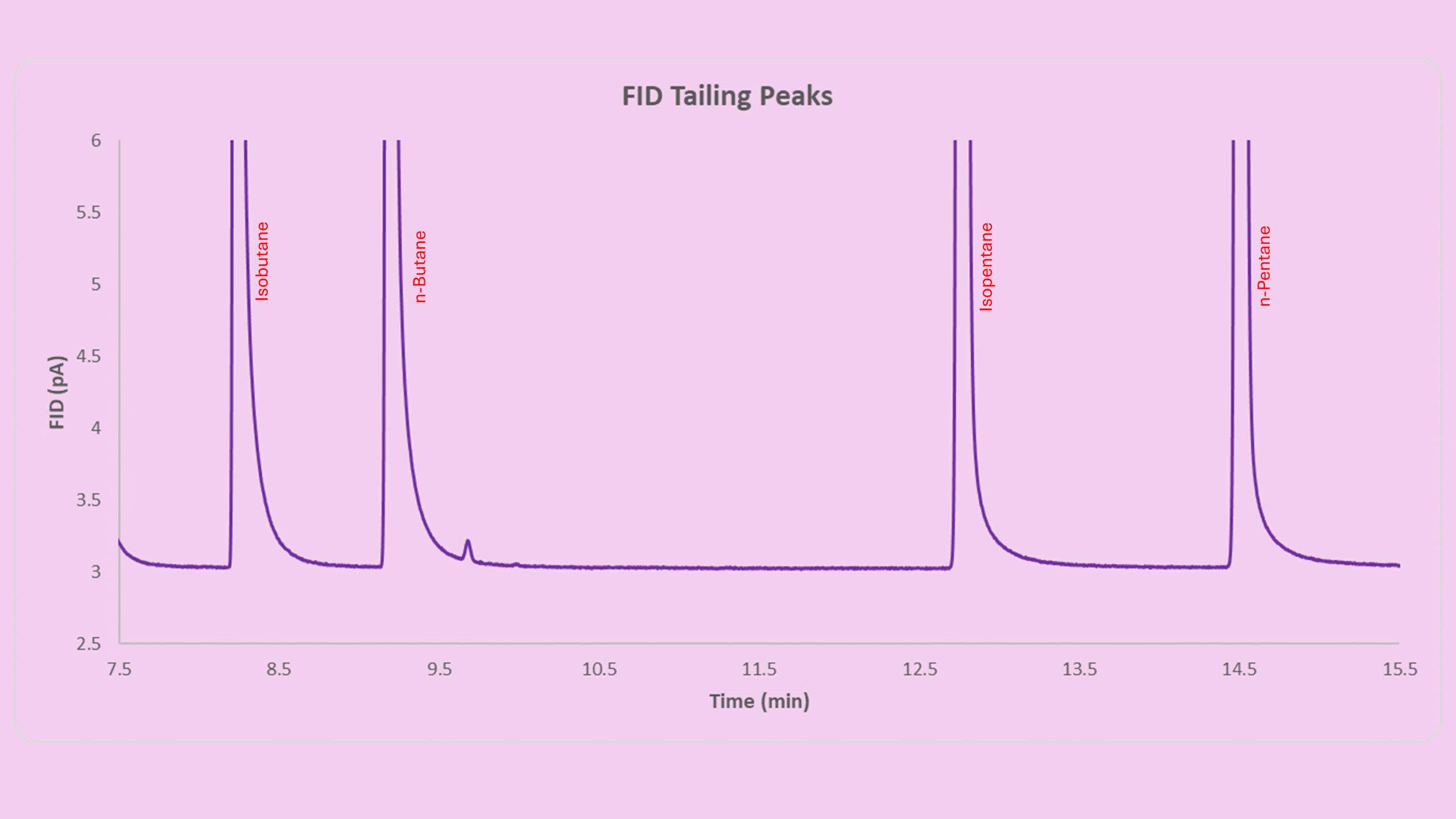
I was analyzing a gasoline sample, and noticed that even non-reactive peaks like paraffins were tailing badly. To confirm, I injected a mixture of just a few n-paraffins, and yes — the tailing persisted.
The culprit? The column wasn’t inserted deep enough into the FID jet. Here’s the rule of thumb: push the column until it meets the jet top, then pull back about 1 mm. In my case, the column was 10 mm from the top, creating dead volume. Reinstalling it properly solved the issue instantly.
2. Flame appears to re-ignite during a run
Sometimes, the FID is lit, but halfway through the run it seems to try re-ignition again. Weird, right?
This often happens when a rotary valve connected to the FID inlet has a too-short restrictor. Switching the valve causes a pressure swing, blowing out the flame like a sudden gust of wind during a barbecue.
Solution: replace the restrictor with a longer, narrower one. Keep in mind, this may require method re-optimization if you’re using a valve system.
3. FID output spikes over 500,000 pA with flame off
Here’s a classic one that keeps happening at many labs. Even when the flame is off, the FID output reads over 500,000 pA.
The fix is surprisingly simple:
- Turn off the FID flame
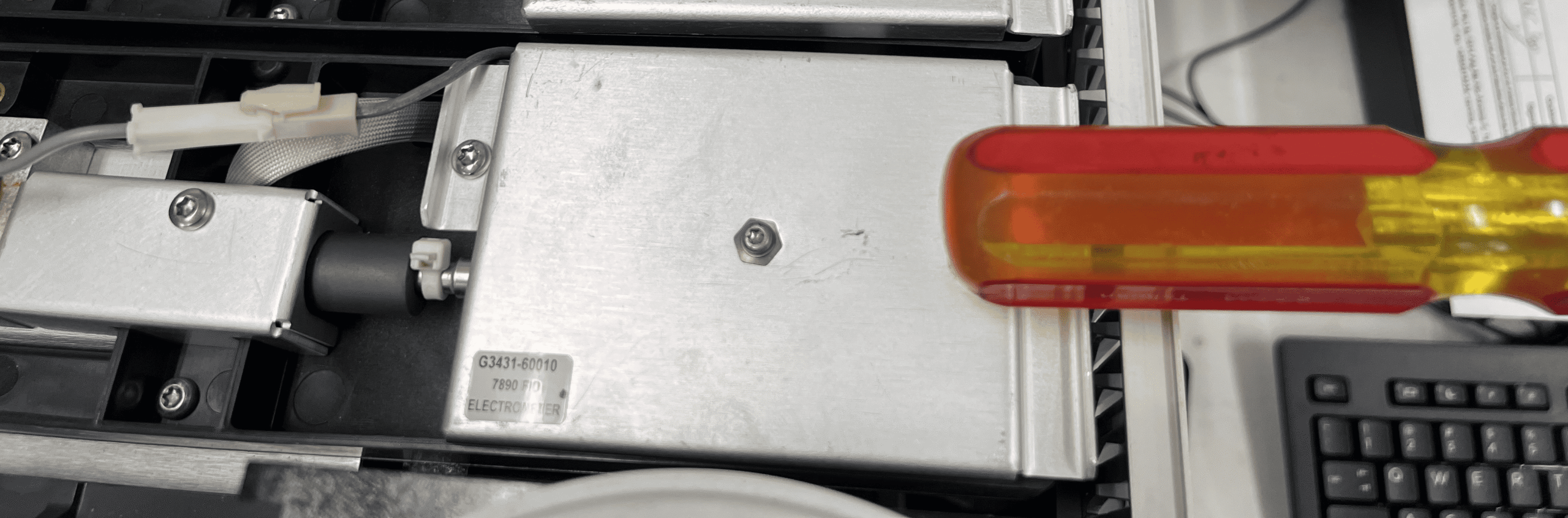
- Open the cover to access the FID electrometer (the alumina rectangle box)
- Make a decent bang at the electrometer with a screwdriver (plastic side)
Magic happens: the output drops to zero.
Rarely, the spring from the electrometer rod might bend. Carefully straighten it with GC power off to fix the issue.
4. How to check if the jet is clogged without removing it
Removing the jet to check for clogs is slow and annoying. Here’s a faster trick I use:
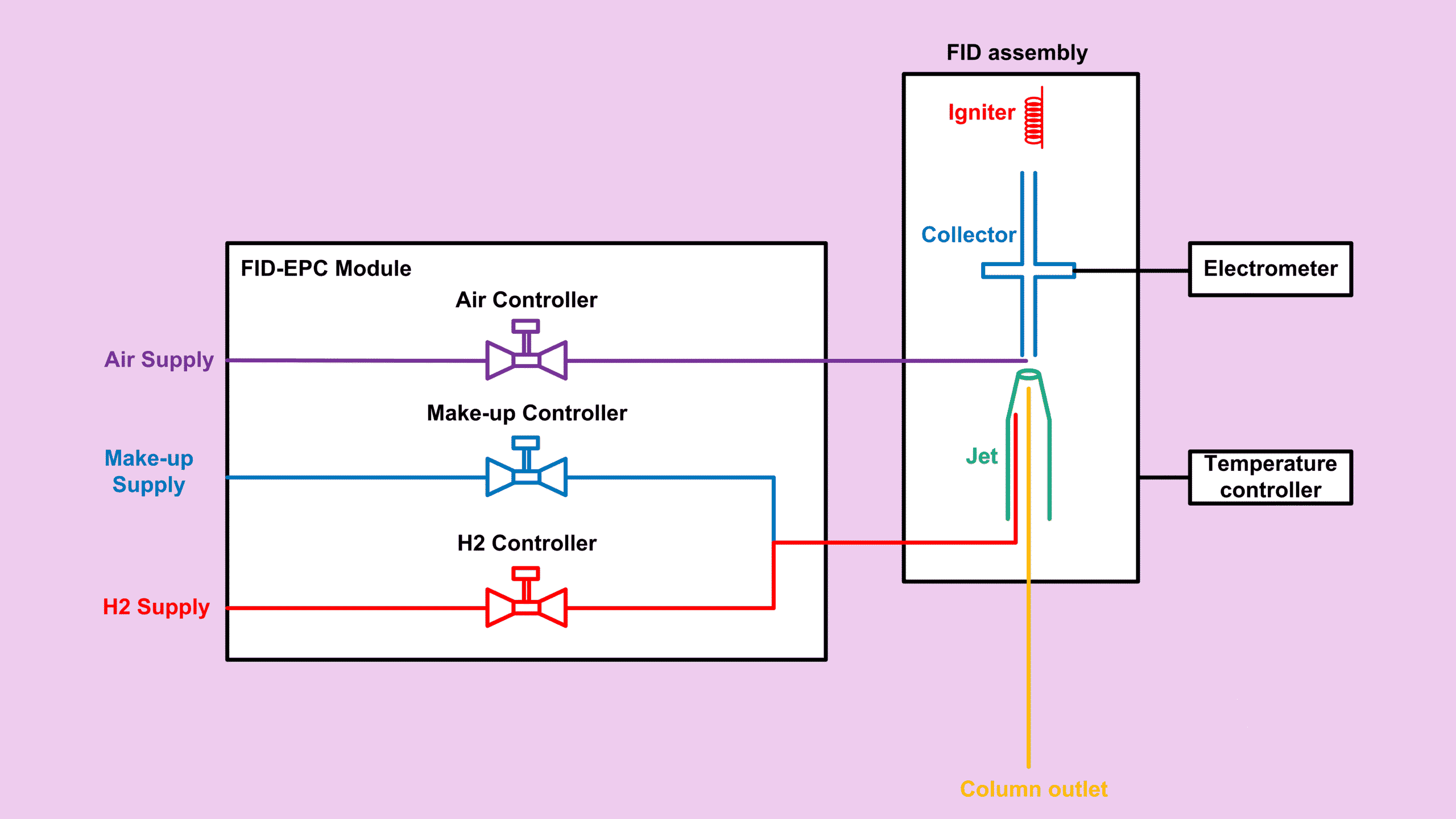
- Turn off H₂, Air, and Make-up gas
- Note the H₂ flow on the GC screen
- Set make-up flow to 30 mL/min
- Observe H₂ flow changes
If the jet is clogged, back-pressure from the make-up gas increases H₂ flow on the display. Typically, a healthy jet won’t increase more than 1 mL/min. I’ve seen clogged jets spike up to 5-20 mL/min.
5. Unexpected peaks before Methane
Sometimes, an additional peak appears just before Methane. What’s going on?
This is usually an application issue, not the FID itself. In my case, the peak was Nitrogen balance gas. While N₂ doesn’t cause any meaningful response with the FID, a large volume can disturb the flame like a gust of wind at a barbecue. The peak appears more like a baseline upset than a true peak.
Key Takeaways
- Proper column insertion prevents tailing of non-reactive peaks
- Valve restrictors and pressure swings can blow out the FID flame
- High FID outputs with flame off often have a simple mechanical fix
- Check jet clogs quickly using H₂ and make-up gas flows
- Unexpected peaks can be caused by inert gases affecting the flame
Try These FID Troubleshooting Tips Today
Don’t let FID mysteries slow you down. Apply these tips and see your chromatograms improve instantly. If you have a funny or tricky FID story, share it in the comments below — I’d love to hear about it!
Meanwhile, refresh your understanding with the following blogs: