

After writing more than 10 detailed posts about the FID detector, each was published at different times in the FID series, it may become difficult to navigate or locate them later. Therefore, I decided to create this summary post to tie all 11 articles together.
This page acts as an anchor guide, helping you quickly find posts explaining the theory as well as the corresponding calculators. Whether you are learning the fundamentals, troubleshooting real problems, or applying response factor calculations, everything is organized here in one place.
FID Detector Basics
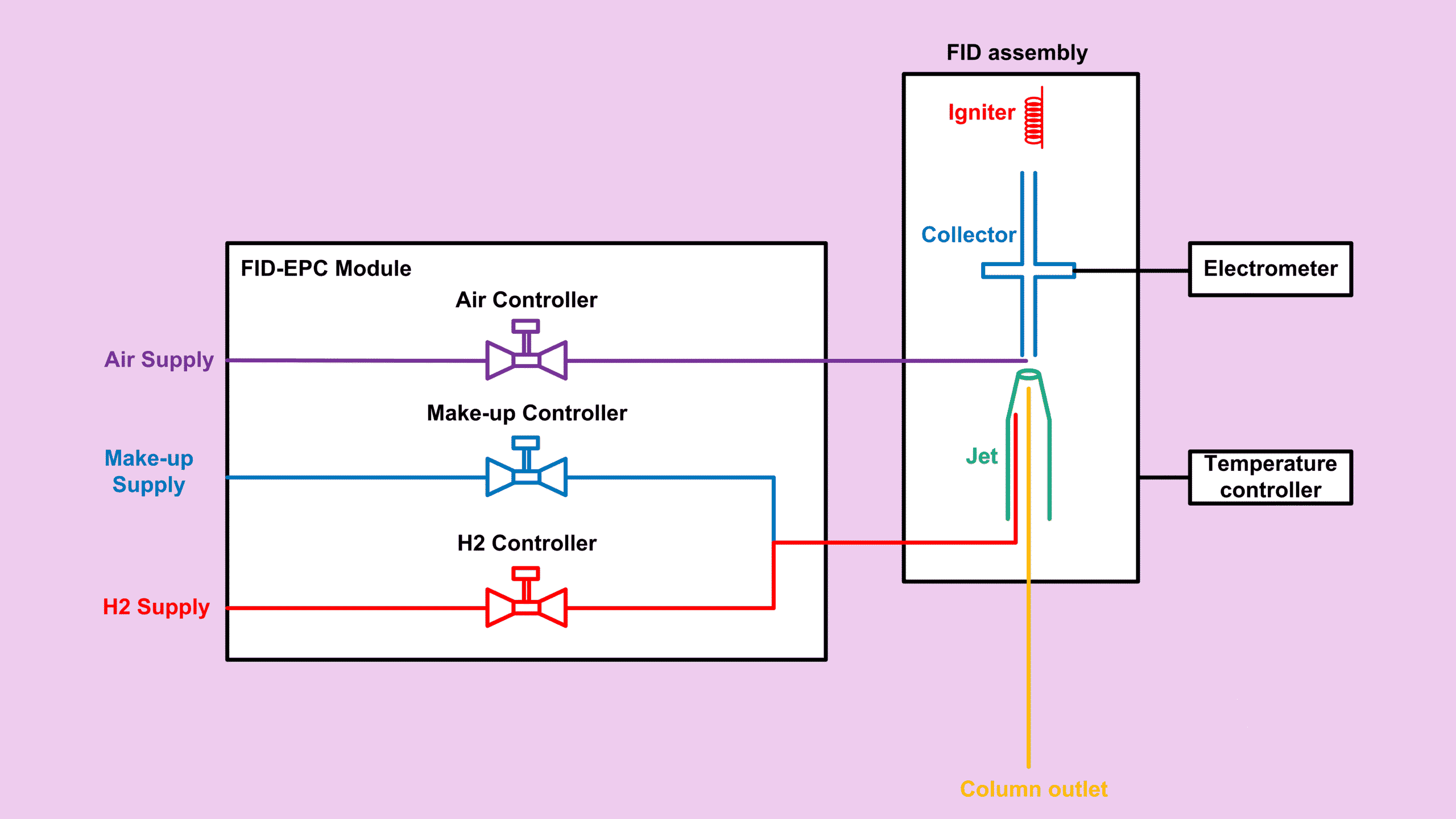
If you want to understand the FID detector from the ground up, the first step is learning how the detector actually works and what components are involved.
Understanding the FID Detector Principle
If you need to learn the basis of the FID, including how it works and the component levels inside an Agilent FID, check out this post:
• FID Detector GC: A Simple Guide to How the FID Works
Maintaining Your FID Detector
Once you understand how the FID detector operates, it becomes much easier to keep it running properly. Regular maintenance helps prevent unstable signals, poor sensitivity, and contamination problems.
If you want practical guidance on keeping your detector in good condition, check out this post:
• Agilent FID Maintenance Made Simple (A Practical Guide for Everyday GC Users)
Troubleshooting Common FID Detector Problems
Sooner or later, every GC user encounters problems with the FID detector. When that happens, practical troubleshooting experience becomes extremely valuable.
The following two posts describe issues I encountered during real service work and how they were fixed in practice, not just theory from textbooks or manuals.
• FID Troubleshooting Guide – Real Service Cases from the Field
• FID Troubleshooting Tips: Solve Common GC FID Issues Quickly
FID Detector Response Factors (RRF)
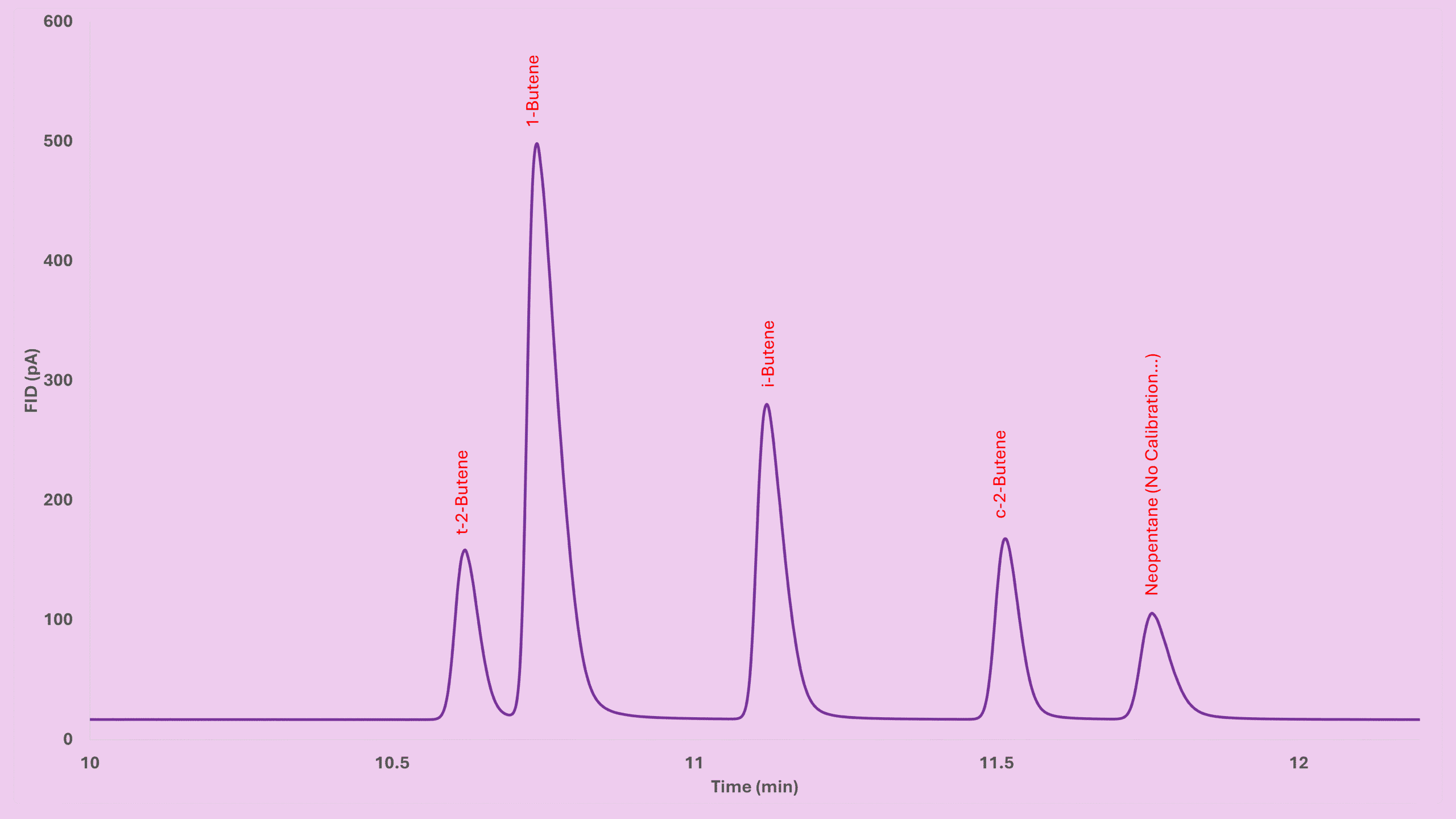
Once you understand the FID detector, you will realize something important: the detector behaves very much like a carbon atom counter. Because the number of carbon atoms in a molecule is known, it becomes possible to estimate detector response even before running a calibration.
Naturally, this leads to the concept of FID Relative Response Factors (RRF).
I published three posts that explain how to derive these formulas based on different unit systems. Even better, each post also includes a dedicated calculator so you do not have to calculate everything manually.
FID Mole Response Factor
If you want to derive the FID mole response factor, check out this post explaining the theory:
• Understanding the FID Mole Response Factor (A Practical Walkthrough)
FID Mass Response Factor
If your calculations are based on mass units instead of mole units, this post walks through the derivation clearly:
• Understanding the FID Mass Response Factor (A Clear and Friendly Walkthrough)
FID Volume Response Factor
For gas-phase work, volume-based calculations are often more practical. This post explains how the formula works:
• Understanding the FID Volume Response Factor (A Friendly Deep Dive)
All FID RRF Formulas Together
If you want all formulas from the three posts above compiled in one place, check out this guide:
• FID Relative Response Factor Formulas and Calculators You Can Use Anytime
Now that you understand how to derive FID detector RRF formulas, there is no need to build your own tools. I have already made the calculators available on this site.
FID RRF Calculator for Gas
If you are working with gas samples, you can use this calculator:
• FID RRF Calculator for Gas – Relative Response Factor Calculator
FID RRF Calculator for Liquid
If you are working with liquid samples, this calculator is available:
• FID RRF Calculator for Liquid – Relative Response Factor Calculator
Applying FID Detector GC RRF in Real Analysis
Once you know the theory behind FID detector RRF, the next step is applying it in real analytical situations.
Quantifying Unknown Peaks Using FID Detector
Sometimes a chromatogram contains peaks without calibration standards. In that situation, the FID RRF approach allows you to estimate concentrations quickly.
You can learn how this works here:
• Post: Calculate FID RRF: How to Quantify Unknown Peaks Instantly
• Calculator: FID RRF Calculator for Unknown Peaks
FID Detector Peak Normalization Without Calibration
In other cases, you may know that all peaks should add up to 100% composition. When that assumption is valid, FID peak normalization allows quantification without calibration.
Learn more here:
• Post: FID RRF Normalization: Quantifying GC Peaks Without Calibration
• Calculator: FID Peak Normalization Calculator
Verifying FID Detector Response Factors
Although theoretical FID RRF values are extremely useful, many analytical methods require verification before using them. In fact, verification steps appear in many ASTM and ISO methods.
If you need to compare theoretical and experimental values, check out:
• Post: FID RRF Verification: Comparing Theoretical and Experimental RRF
• Calculator: FID RRF Verification Calculator (Theoretical vs Experimental)
FID Detector with Methanizer for CO and CO₂
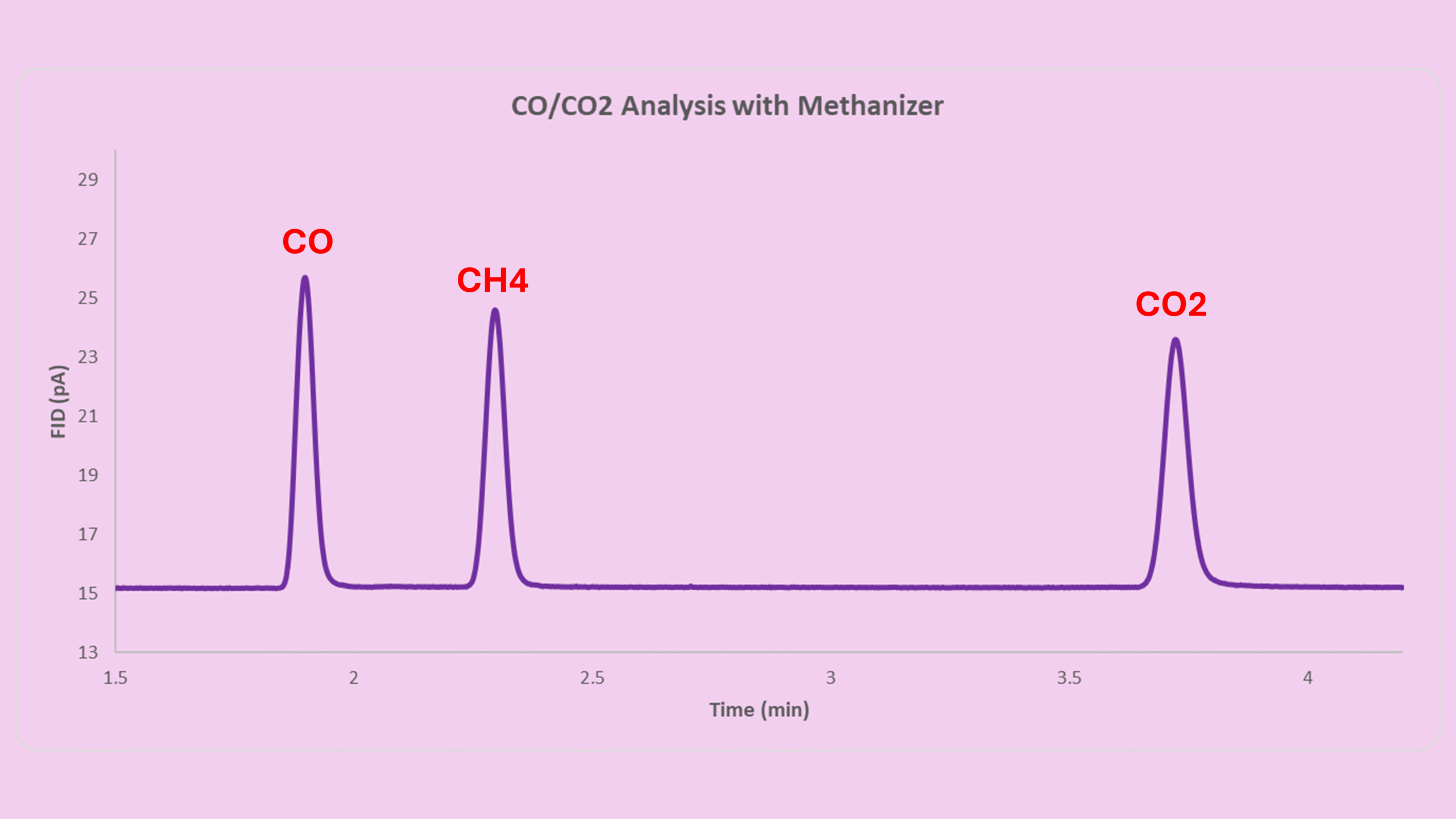
The FID series would not be complete without discussing the methanizer, a common add-on used to detect CO and CO₂.
The methanizer converts these compounds into methane so they can be detected by the FID.
If you want to learn both the principle and the calculator used in practical work, check out these resources:
• Post: How FID CO CO2 Detection Works Using a Methanizer
• Calculator: FID Methanizer RRF Calculator
Key Takeaways
The FID detector is one of the most widely used detectors in gas chromatography. However, understanding how it works and how to apply its response factors can greatly expand its analytical power.
From this series you can learn:
• The fundamentals of the FID detector
• How to maintain and troubleshoot the detector
• How to derive FID response factor formulas
• How to quantify unknown peaks without calibration
• How to verify theoretical FID RRF values
• How a methanizer enables CO and CO₂ detection
This summary page connects all posts in the series so you can quickly find the information or calculators you need.
Explore the Full FID Detector Series
If you work with FID in GC systems, this collection of guides and calculators can help you better understand the FID and apply it more effectively in real analytical work.
Take a moment to explore the posts linked throughout this guide and bookmark the calculators for future reference.