
In this post, we will dive into average linear gas velocity, one of the important factors in gas chromatography. While it does not directly define column performance or evaluation, it plays a key role as a practical aid during method setup.
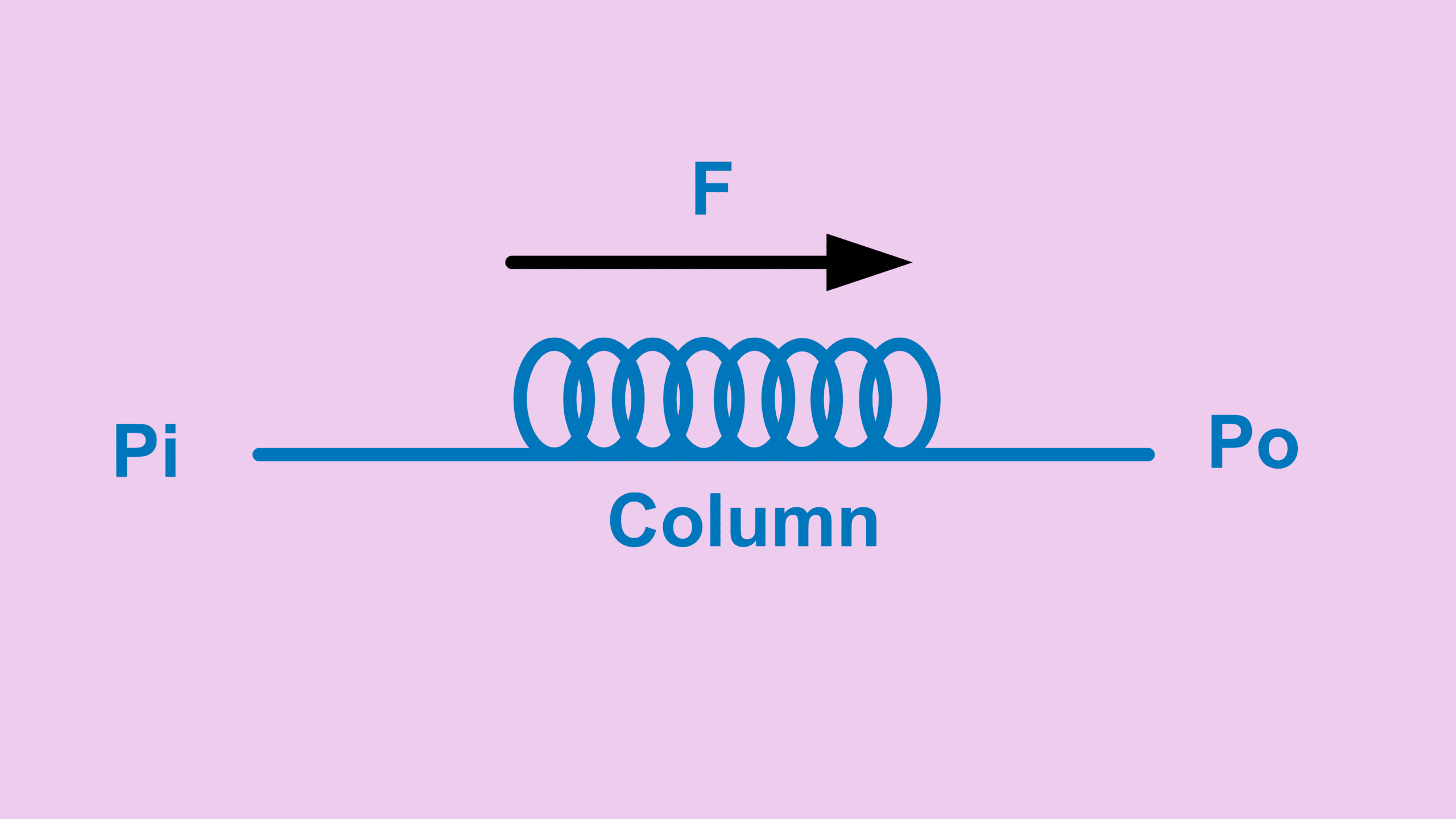
This parameter indicates how fast the carrier gas flows through the entire column. However, the velocity is not constant from the inlet to the outlet. Therefore, we use the concept of average linear gas velocity to represent the overall flow behavior inside the column.
What Is Average Linear Gas Velocity
The idea is closely related to the work of Jan Van Deemter. To put it simply, an analyte should not move too quickly or too slowly through the column. Instead, there is a “sweet spot” where separation efficiency is optimized.
This sweet spot is commonly expressed in terms of average linear gas velocity.
In general, the recommended ranges are:
- For He carrier gas: it should be between 20–40 cm/s
- For H₂ carrier gas: itshould be between 30–50 cm/s
- For N₂ carrier gas: it should be between 10–15 cm/s
How to Calculate Average Linear Gas Velocity
Step 1: Determine Column Hold-Up Time
Before calculating average linear velocity, you need to find the column hold-up time.
Although it can be calculated theoretically, measuring it directly is usually more reliable.
Column hold-up time refers to the time required for an analyte with zero interaction with the column to pass through it under specific conditions (temperature, pressure, etc.). In many cases, methane is used.
To determine this:
- Inject a sample containing methane
- Record the retention time of methane
- Use this value as the column hold-up time (in minutes)
Step 2: Calculate Average Linear Gas Velocity
Once the hold-up time is known, you can calculate average linear velocity.
\[ u=\frac{L}{t_M} \]Where:
- u = average linear velocity
- L = column length (m)
- tM = hold-up time (min)
This gives the unit in meters per minute. However, the more common unit is cm/s, so we convert it:
\[ u=\frac{L \times 100}{t_M \times 60} \]I personally use this formula frequently, so I built a free tool on my site:
GC Linear Velocity Calculator (Outlet Flow & Hold-up Time Based)
Recommended Average Linear Gas Velocity Range
Once you calculate average linear velocity, compare it with the recommended ranges:
- For He carrier gas: should be between 20–40 cm/s
- For H₂ carrier gas: should be between 30–50 cm/s
- For N₂ carrier gas: should be between 10–15 cm/s
If your value falls outside the range, adjust the column head pressure (typically inlet pressure) and repeat the measurement.
Why Average Linear Gas Velocity Matters
Getting the correct average linear velocity does not guarantee perfect separation. However, it gives you a strong starting point.
In other words, it sets the foundation for method development. From there, you can fine-tune other parameters to improve separation.
Starting with the right average linear velocity simply makes everything easier.
Key Takeaways
- Average linear velocity describes how fast carrier gas moves through the column
- It is based on hold-up time and column length
- Each carrier gas has its own optimal range
- It is not a final solution, but a strong starting point for method development
Ready to Apply This in Your Method?
If you regularly work with GC, getting your average linear velocity right will save you time during method development.
Try using the calculator on the site and see how quickly you can dial in your conditions.
Check out other posts about column evaluation below:
- GC Column Characteristics
- GC Peak Resolution Calculation: What It Really Means in Practice
- GC Peak Skewness Explained Simply
- Number of Theoretical Plates Explained in Gas Chromatography
- GC Retention Factor Calculation (k) – Simple and Practical Guide
- GC Retention Index Explained Simply
- Retention Index Calculation Made Simple for GC Users