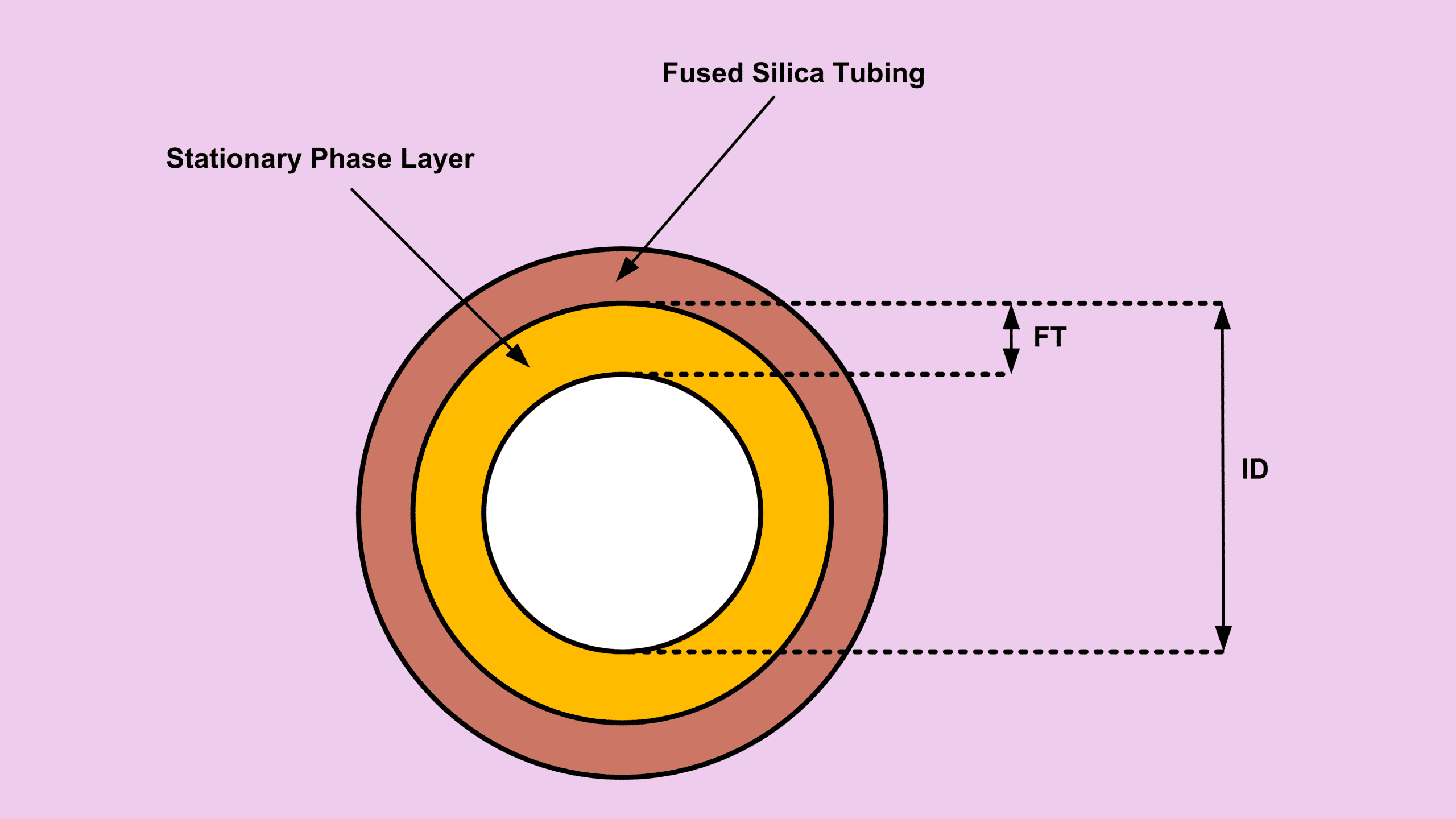

When working with gas chromatography, the number of theoretical plates is one of the most important indicators of column performance. In simple terms, the number of theoretical plates tells you how efficiently your column separates compounds based on how often an analyte interacts with the stationary phase.
What is the Number of Theoretical Plates?
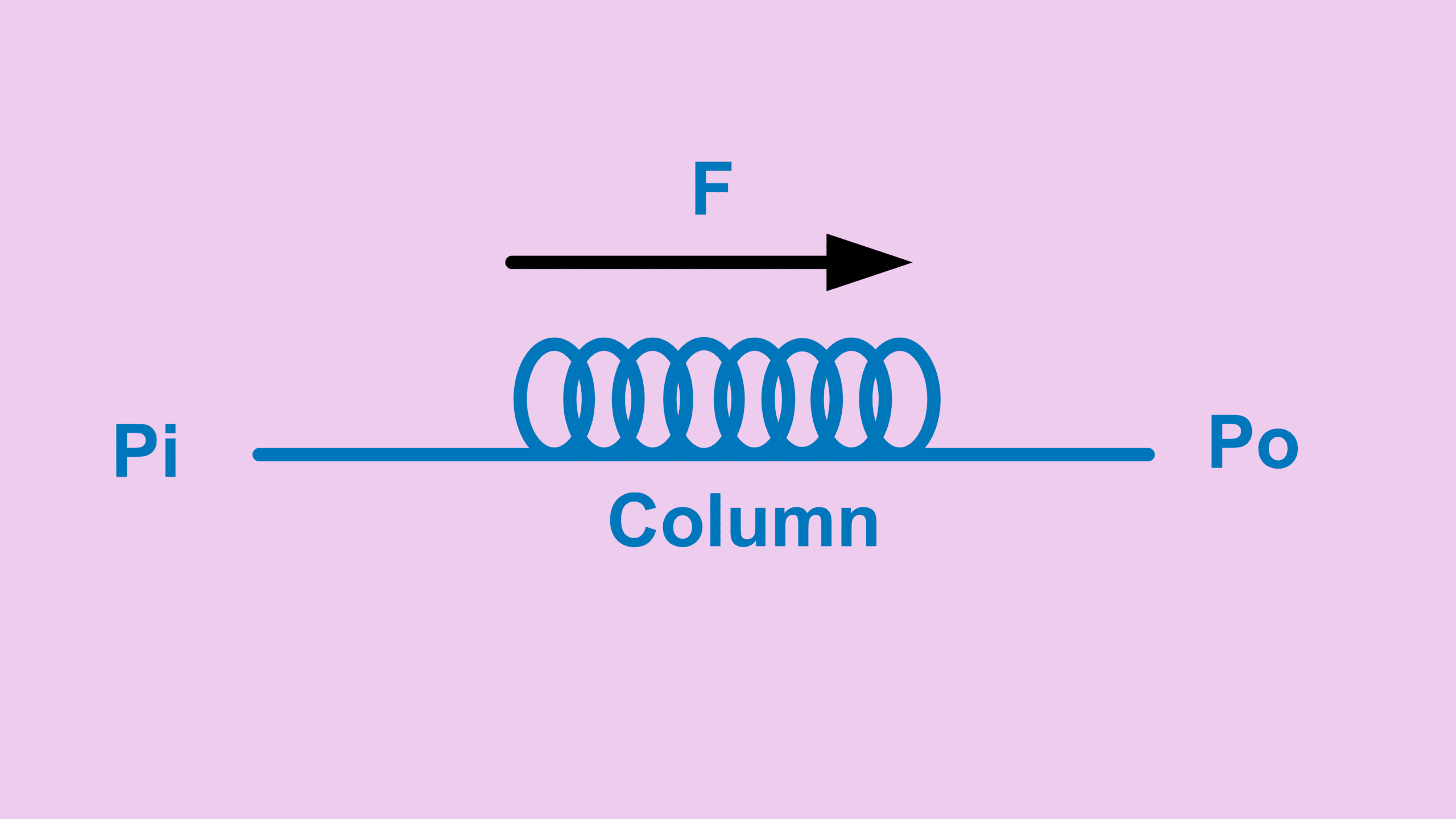
The number of theoretical plates can be thought of as how many times an analyte interacts with the stationary phase along the entire column. Naturally, the higher the number, the more interactions occur — and therefore, the better the separation power.
Here is the formula:
\[ N=5.545 \times \left( \frac{t_R}{W_{1/2}} \right)^2 \]Where:
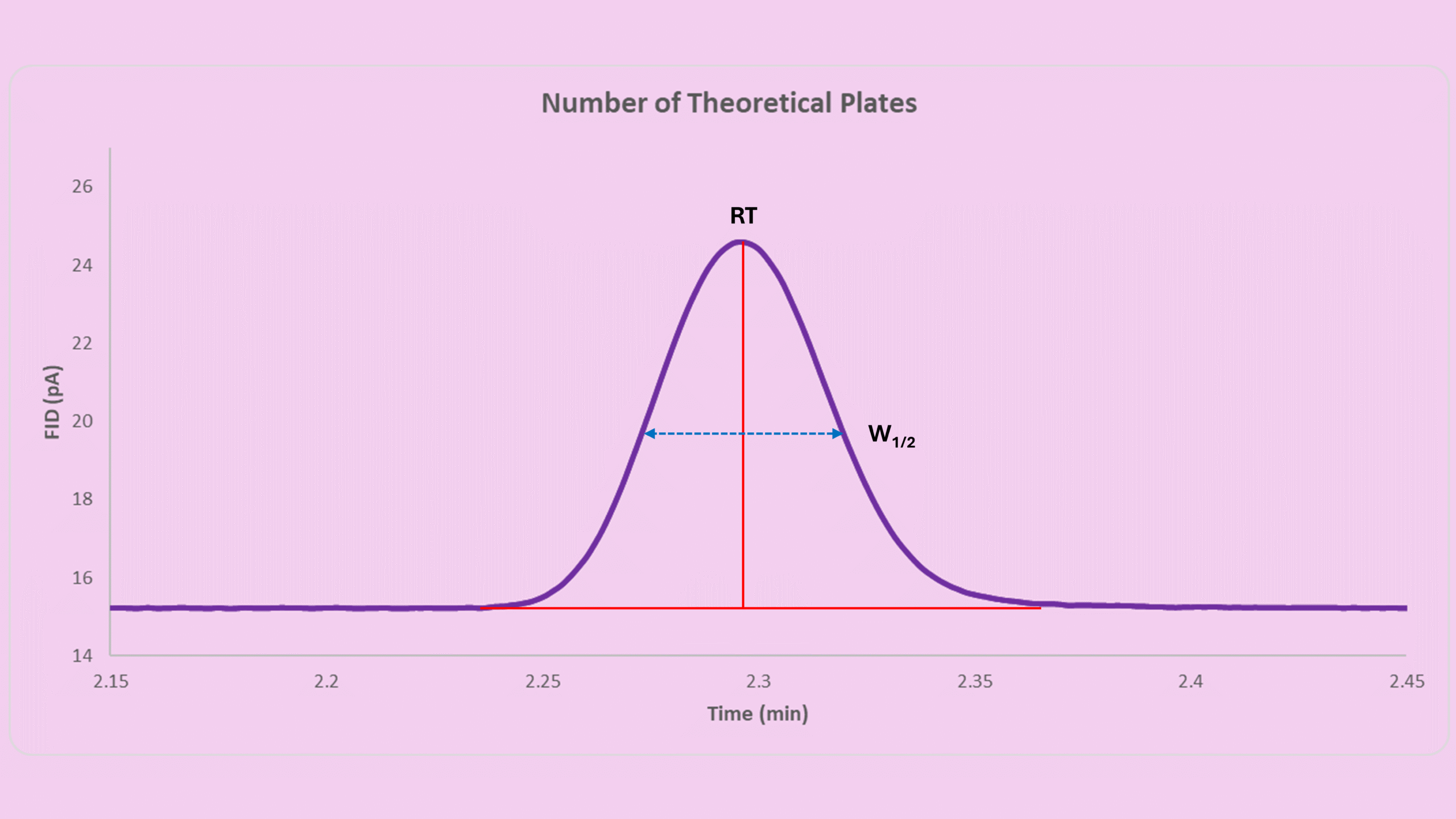
- tR is the retention time of the reference peak (min)
- W1/2 is the peak width at half height (min)
There is no universal pass/fail value for the theoretical plates. However, most methods specify a requirement. For example, ASTM D6730 requires a minimum value of 400,000 when injecting n-pentane under defined conditions.
Why Does the Formula Use 5.545?
At first glance, the constant 5.545 may seem unusual. However, it becomes clear when the peak is assumed to be Gaussian (symmetric).
As discussed in the related post Understanding Gaussian Distribution Chromatography in Practical GC Work, the peak width at half height corresponds to about 1.177σ from the center of the peak. Therefore:
\[ W_{1/2} = 1.177 \times 2 \sigma = 2.354 \sigma \]Since the theoretical plate number is fundamentally defined as:
\[ N=\left( \frac{t_R}{\sigma} \right)^2 \]We substitute
\[ \sigma = \frac{W_{1/2}}{2.354} \] \[ N = \left( \frac{t_R}{W_{1/2}/2.354} \right)^2 \]Which simplifies to:
\[ N = 5.545 \left( \frac{t_R}{W_{1/2}} \right)^2 \]Why is There a Square in the Formula?
The number of theoretical plates is based on how far a compound travels compared to how much its peak spreads.
- Retention time (tR) represents how far the compound has effectively traveled
- Peak width (σ) represents how much the compound has dispersed
Therefore, the ratio tR/σ shows how “tight” the peak is relative to its travel time.
However, peak spreading follows variance (σ2), not just σ. This happens because the peak spreads in both directions — left and right. As a result, variance is used to properly represent total dispersion.
So, the ratio is squared to reflect how spreading accumulates along the column. Because of this, the theoretical plates scales correctly with column length and truly represents column efficiency.
How to Calculate Number of Theoretical Plates Manually
Most chromatography software will calculate the number of theoretical plates automatically. However, if needed, you can do it manually:
- Draw a baseline for the peak
- From the peak top, draw a vertical line to the baseline
- Draw a horizontal line at 50% of the peak height
- Measure the width between both sides at this level (this is W1/2)
- Use retention time and width to calculate the number of theoretical plates
I make a calculator (Theoretical Plates Calculator) available on my site so it’s easy to use.
Key Takeaways
- The number of theoretical plates measures column efficiency
- Higher values indicate better separation performance
- The constant 5.545 comes from Gaussian peak properties
- The squared term reflects variance-based peak spreading
- Manual calculation is possible using retention time and peak width
Final Thoughts
Understanding the number of theoretical plates helps you evaluate your GC system beyond just looking at peaks. Once you know what affects it, you can make better decisions when optimizing your method.
If you want to simplify your workflow, try using the calculator available on my site to quickly determine the value without manual calculation.
Check out other posts about column evaluation below:
- GC Column Characteristics
- Average Linear Gas Velocity in GC: What It Means and How to Use It
- GC Peak Resolution Calculation: What It Really Means in Practice
- GC Peak Skewness Explained Simply
- GC Retention Factor Calculation (k) – Simple and Practical Guide
- GC Retention Index Explained Simply
- Retention Index Calculation Made Simple for GC Users