
Before diving into this post, let’s quickly revisit the core idea of retention index calculation. If you work with gas chromatography, you already know how powerful this concept can be.
Retention Index Formulas Refresher
For isothermal or near-isothermal temperatures:
\[ RI_{i} = 100 \times ({n_{1} + \frac{\lg(t_{i}) – \lg(t_{1})} {\lg(t_{2}) – \lg(t_{1})} \times ({n_2 – n_1})}) \]For programmed temperatures:
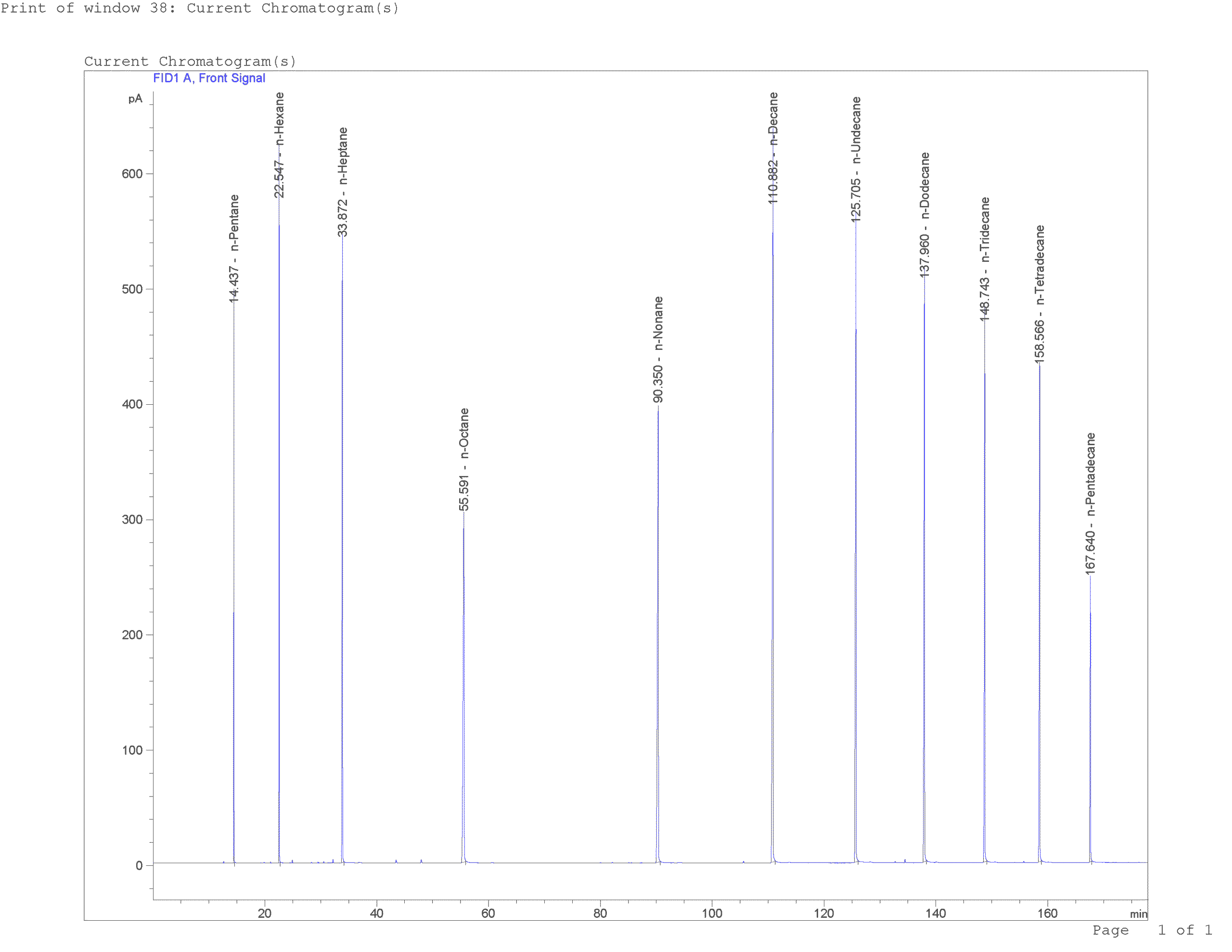
\[ RI_{i} = 100 \times ({n_{1} + \frac{t_{i} – t_{1}} {t_{2} – t_{1}} \times ({n_2 – n_1})}) \]As you can see, retention index calculation becomes straightforward as long as two bracketed n-paraffins are available. Once you know their retention times and carbon numbers, you can determine the index of any unknown compound in between.
Likewise, if the index of an unknown compound is already known, you can also calculate its retention time.
To make this easier, I built a dedicated calculator:
👉 Retention Index Calculator
Why Retention Index Calculation Is So Powerful
1. Identifying Unknown Peaks
The first major advantage of retention index calculation is peak identification.
Because the index is standardized, it allows you to compare your results with reliable references such as:
- NIST libraries
- ASTM D6730 tables
As a result, you can narrow down what an unknown peak could be — especially when mass spectrometry is not available.
2. Calculating Relative Polarity
Another practical use of retention index calculation is determining relative polarity.
This is simply the difference in retention index between adjacent compounds.
You can try it here:
👉 Relative Polarity Calculator (RI Difference)
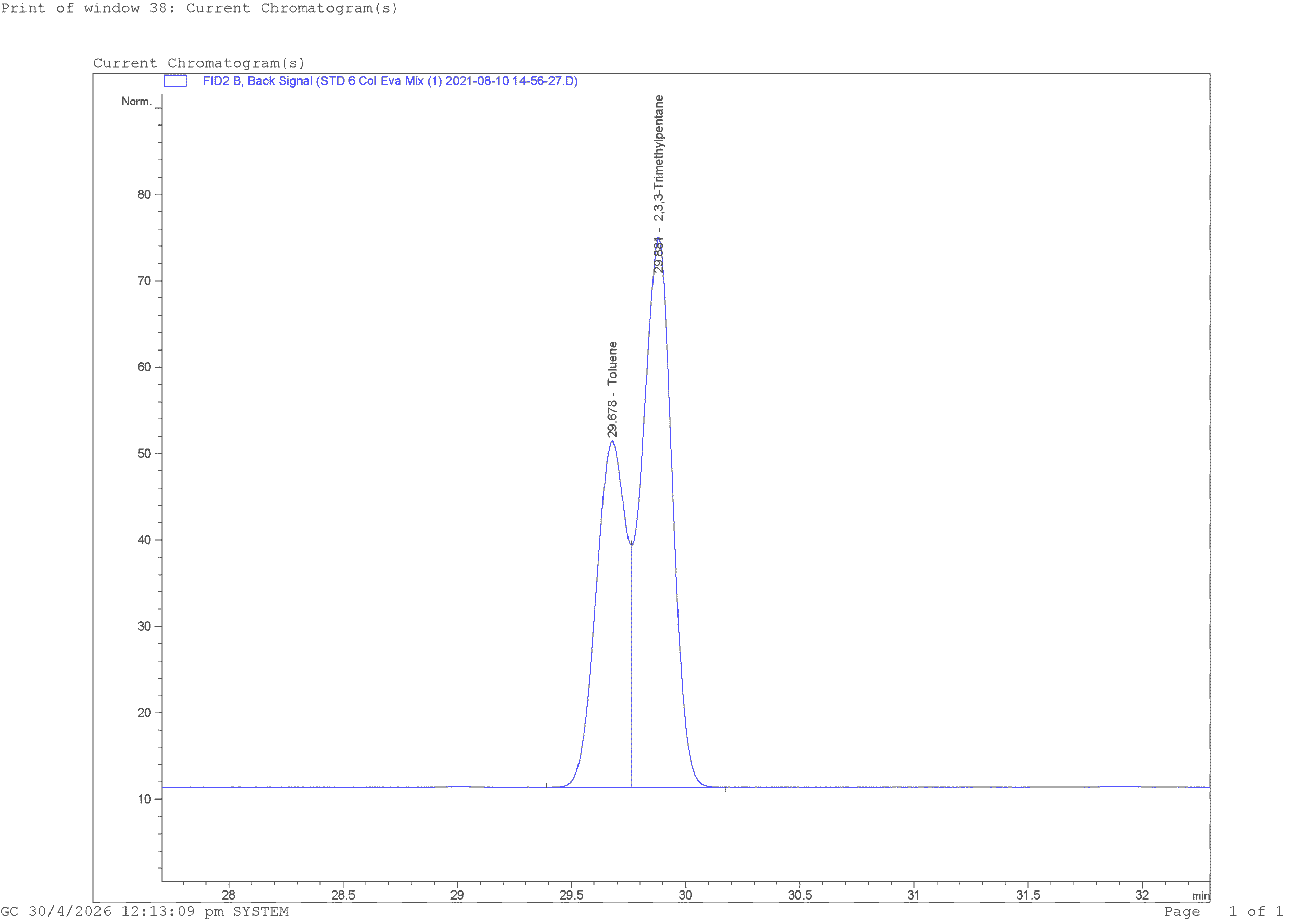
For example, ASTM D5134 specifies that the polarity between toluene and 2,3,3-dimethylpentane should fall between 0 and 0.8.
3. McReynolds Polarity Calculation
The third key application of retention index calculation is evaluating McReynolds polarity.
You can explore the calculator here:
👉 McReynolds Polarity Calculator
The total McReynolds polarity is calculated as the sum of differences between:
- The test column
- A reference column (typically squalane, a nonpolar phase)
Typically, five probe compounds are used:
| Symbol | Probe Compound | Interaction Type |
|---|---|---|
| x | Benzene | π interactions |
| y | 1-Butanol | Hydrogen bonding |
| z | 2-Pentanone | Dipole interactions |
| u | Nitropropane | Strong dipole |
| s | Pyridine | Basic / H-bond acceptor |
Each compound contributes an index difference. Then, all values are summed to give the total McReynolds polarity.
Typical Interpretation
- < 100 → very nonpolar
- 100–400 → moderately polar
- > 400 → highly polar
Key Takeaways
- Retention index calculation allows you to determine compound identity using reference standards
- It enables relative polarity evaluation for method validation
- It forms the basis for McReynolds polarity, which helps classify GC columns
- With the right tools, the process becomes fast and practical
Try It Yourself
If you’re working with GC data regularly, these tools can save you a lot of time and guesswork.
👉 Try the calculators and see how retention index calculation can simplify your workflow.
Check out other posts about column evaluation below:
- GC Column Characteristics
- Average Linear Gas Velocity in GC: What It Means and How to Use It
- GC Peak Resolution Calculation: What It Really Means in Practice
- GC Peak Skewness Explained Simply
- Number of Theoretical Plates Explained in Gas Chromatography
- GC Retention Factor Calculation (k) – Simple and Practical Guide
- GC Retention Index Explained Simply